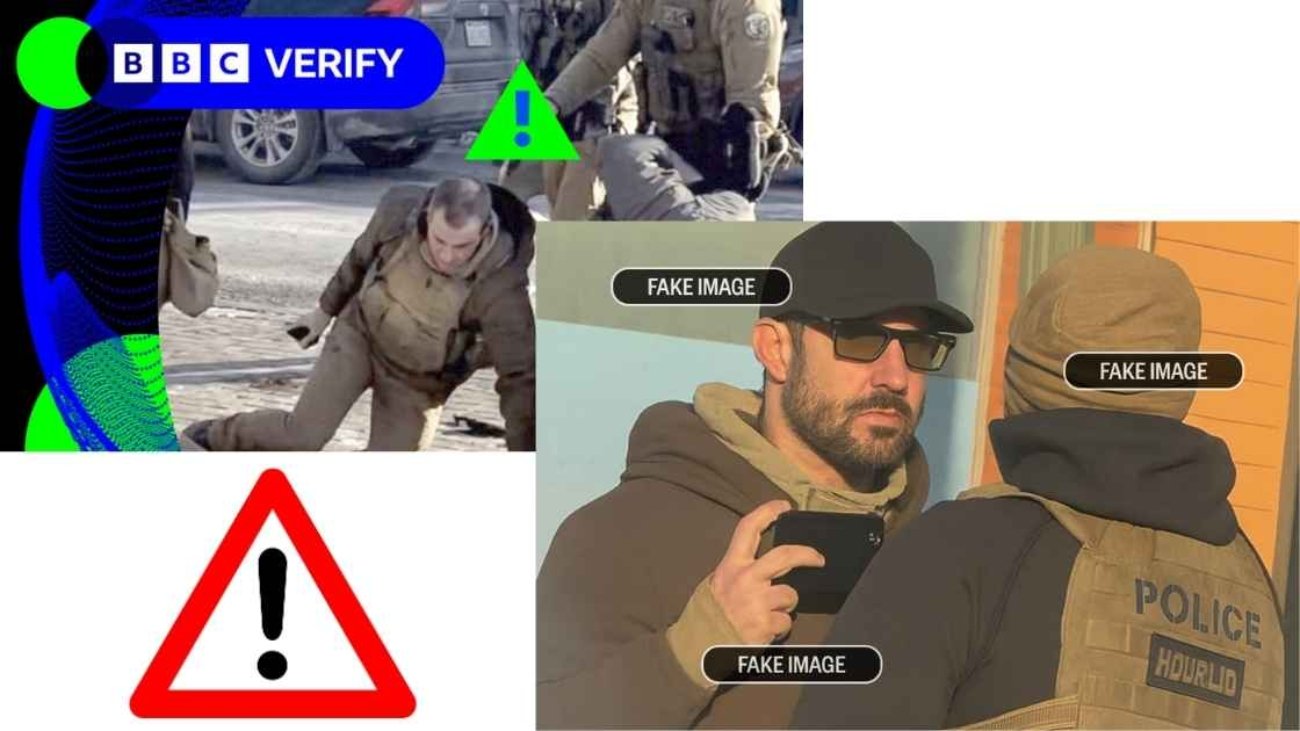
In January 2026, the fatal shootings of two U.S. citizens—37-year-old ICU nurse Alex Pretti and 37-year-old mother Renee Nicole Good—by federal immigration agents in Minneapolis ignited nationwide protests, intense scrutiny of immigration enforcement under the Trump administration, and a surge in online misinformation. Almost immediately after bystander videos surfaced, social media platforms like X, Facebook, TikTok, and Instagram were flooded with AI-altered images and AI-enhanced videos of the incidents. What users often described as efforts to “clarify” grainy footage quickly devolved into widespread confusion, with manipulated visuals introducing fabricated details like missing limbs, unnatural body blends, and altered sequences that contradicted verified evidence from multiple angles.
These AI-manipulated images of Minneapolis shootings have misled millions, fueling polarized debates over police use of force, immigration policy, and public trust in visual media. As experts warn, the subtle nature of many alterations—starting from real footage and only tweaking specifics—makes them particularly dangerous in an era where synthetic media spreads faster than fact-checks.
What Happened in the Minneapolis Shootings? Background for Context
The incidents unfolded amid Operation Metro Surge, a major immigration enforcement push that led to multiple shootings in early 2026.
- January 7: ICE agent Jonathan Ross fatally shot Renee Nicole Good, a U.S. citizen and mother of three, in her vehicle on Portland Avenue South. Officials initially claimed she “weaponized” her car and attempted to run over an agent in an act labeled “domestic terrorism.” However, bystander videos showed her turning away from the officer just before shots were fired, with autopsy reports confirming strikes to her arm, breast, and head.
- January 24: Border Patrol agents shot and killed Alex Pretti, an intensive care nurse at the Minneapolis VA Medical Center, during an encounter on Nicollet Avenue. Verified multi-angle footage captured agents tackling Pretti (who was recording on his phone), removing his legally carried firearm from his waistband, and then firing multiple times as he fell forward—often unarmed and after being pepper-sprayed and struck. Initial official accounts alleged he brandished a weapon, but analyses challenged this, prompting a Department of Justice civil rights probe (separate from DHS investigations).
These events, part of broader immigration crackdowns, sparked outrage and protests, with verified videos playing a key role in public discourse. For detailed timelines and verified footage analysis, see coverage from The New York Times interactive timeline on Alex Pretti’s shooting.
How AI-Altered Images Took Over Social Media
Users turned to accessible AI tools—image upscalers, editors like Google’s Gemini, Grok’s edit features, and others—to “enhance” low-resolution stills from bystander recordings. The results went viral, amassing millions of views before corrections could catch up.
Common manipulations included:
- Headless agents and blended body parts in images of Pretti’s collapse, classic AI “hallucinations” where tools invent details to fill gaps in blurry source material.
- False depictions showing Pretti pointing or holding a gun at agents (contradicting footage where he held a phone).
- AI “unmasking” attempts on masked ICE agents in Good’s case, generating fabricated faces that circulated as authentic revelations.
Fact-checking organizations quickly identified these as altered, noting how they spread faster than labels or community notes on platforms. In one notable case, an AI-manipulated frame from Pretti’s shooting reportedly appeared during U.S. Senate discussions, highlighting infiltration into official spaces. A key example of such alterations is documented in Full Fact’s analysis of an AI-enhanced image from the Pretti shooting, which highlights visible distortions like missing heads and fused elements.
Why AI Misinformation Blurs Reality in 2026
Unlike overt deepfakes of prior years, many current AI-altered images start from genuine footage and apply subtle enhancements—sharpening, color correction, or minor reconstructions—that fool casual viewers. This subtlety amplifies polarization: supporters of aggressive enforcement share versions implying victims posed immediate threats, while critics circulate clips suggesting excessive force or cover-ups.
The broader impact erodes trust in all visual evidence. As digital forensics experts note, repeated exposure to manipulations trains people to dismiss even authentic videos. In politically charged contexts like immigration enforcement, this fractures shared reality, complicates investigations, and hinders accountability.
How to Spot AI-Manipulated Images of the Shootings
To navigate this landscape:
- Examine for anatomical errors: missing or fused limbs, extra fingers, unnatural head shapes, or blended elements (e.g., agent limbs merging with ground objects).
- Check lighting, shadows, and reflections for inconsistencies—AI often struggles with realistic physics.
- Use reverse image search tools (Google, TinEye) and AI detection platforms like Hive Moderation to flag manipulations.
- Rely on multiple verified sources: cross-reference with footage compiled by major outlets rather than single viral posts.
- Pause before sharing graphic content, especially from unverified accounts during breaking news.
The Bigger Picture – AI Deepfakes and Public Trust
This Minneapolis case underscores the escalating challenge of synthetic media in real-world events. From Grok-generated fabrications to platform moderation struggles, AI misinformation now reshapes narratives around justice and policy. Experts emphasize that without stronger digital literacy, platform safeguards, and public awareness, the line between evidence and fabrication will continue blurring—with consequences for democracy, investigations, and social cohesion.
Conclusion
As AI tools grow more powerful and user-friendly, scrutinizing every visual becomes essential. Cross-check with reputable sources, verify through multiple angles, and think twice before amplifying unconfirmed content. Building digital literacy isn’t just personal—it’s a collective defense against misinformation in an age where seeing no longer guarantees believing.